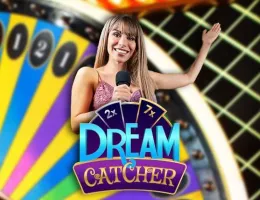
Dream Catcher is a live game show from Evolution Gaming, built around a large vertical money wheel. You bet on the number you expect the wheel to stop on, and the round is settled when it does. This page explains how a round works, what the RTP means and how a game show differs from a table game.
How the game is presented
A host spins a 54-segment wheel and players bet on numbers, while multiplier segments make the bets respin and multiply the next winning number. A round has a betting period, the spin and the result, and the host runs it from a studio stream.
Dream Catcher is a game show and not a table game, so there are no cards or dealer decisions: your only choices are which segments to back and how much to stake. Rounds are short, which is a reason to decide your limit before the first spin and not during play. If you want to compare it with other live games, see the live casino page and the roulette page, which covers a wheel game where you also bet on where the ball lands.
Rules in short

You place bets before the spin. Each number segment pays according to the number on it, and a bet on a number wins only if the wheel stops there. The multiplier segments do not pay on their own: they trigger a respin of the bets and multiply the next winning number.
The RTP is 96.58 per cent. That figure describes the long-run return across a very large number of rounds, not what any single session returns. Each spin is random, and the earlier results have no effect on the next one.
Betting systems, such as doubling a stake after a loss, do not change the odds of the wheel. They only change how much is at risk on each spin.
18+ · T&Cs apply
Game show versus RNG play

A live game show is run by a host with a real wheel, and everyone in the round shares the same spin. Rounds follow the host's pace. An RNG game settles bets with software instead, without a host, and you control when each round starts.
Playing sensibly

Read the paytable and the rules for the multiplier segments before you bet. Set a spending limit first, and treat it as the cost of the entertainment. Stop when you reach it.